
Consumer experience
What Powell’s Books at PDX Taught Me About Designing Consumer Experiences That Convert
A lesson in curation, trust and making it easier for a time-constrained shopper to say yes.

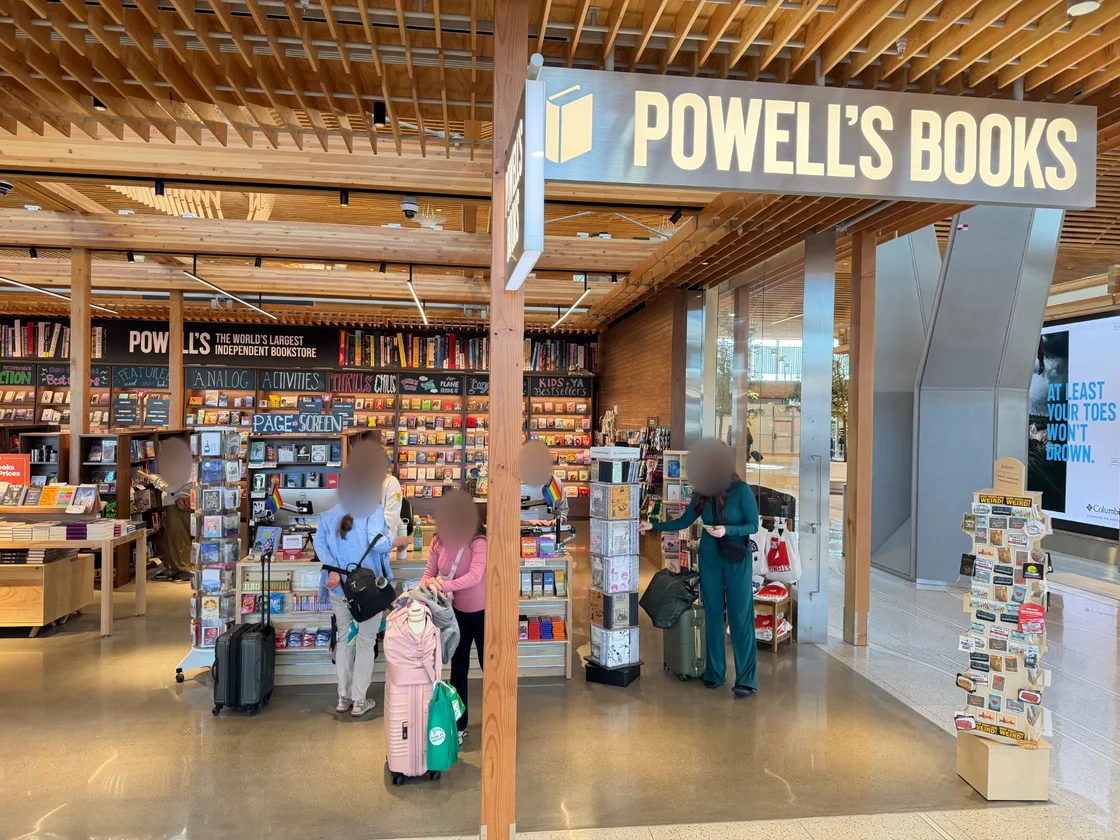
I found myself nerding out on consumer experience during a recent trip through the Portland airport.
Powell’s Books (opens in a new tab) drew me in before I intended to buy anything.
I am a student of interesting and engaging consumer experiences, especially the choices a brand makes that create delight while helping someone move toward a purchase.
An airport makes that challenge particularly interesting. Time is limited. Attention is scattered. Some travelers already know Powell’s and bring years of experience with the brand. Others may be encountering it for the first time.
This store has to express enough of Powell’s to pull someone in, then help that person find something worth carrying onto the plane.
In a time-constrained environment, curation can be both brand expression and a conversion tool.
How do you make a large assortment feel easy to shop?
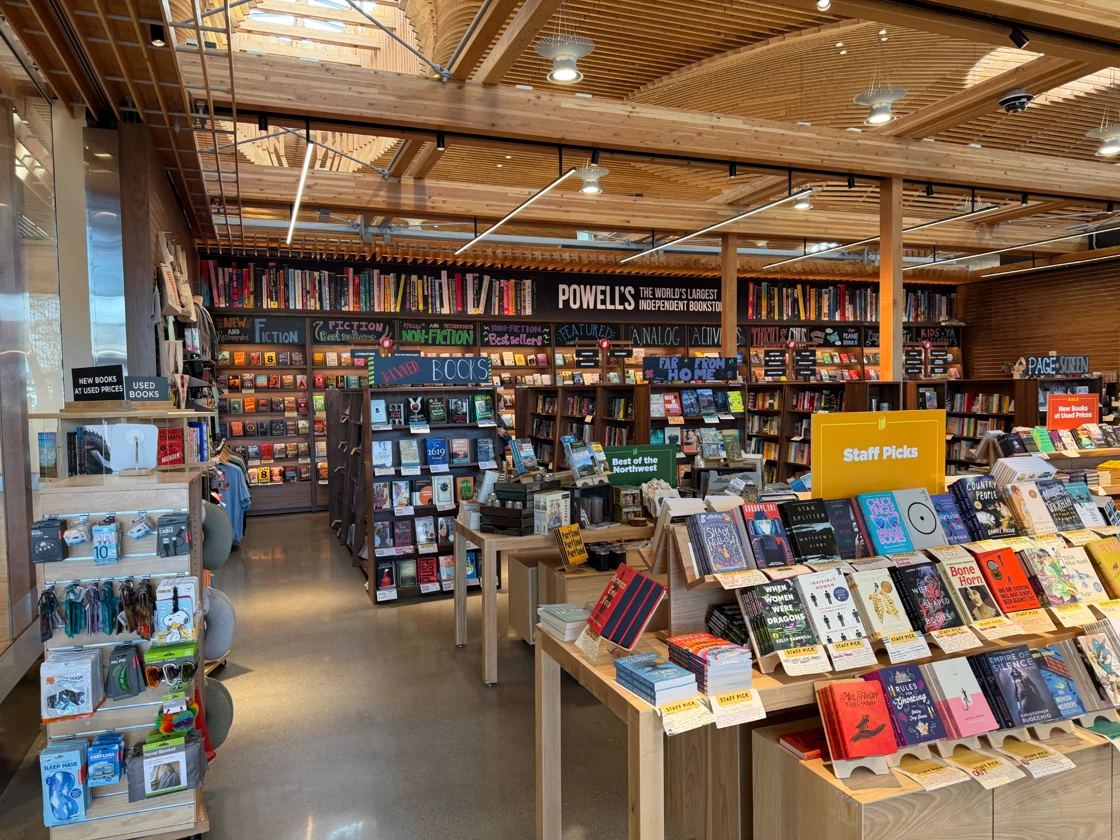
The first thing I noticed was how much curation was doing the work.
Staff Picks. Best of the Northwest. Buzzworthy Books. Far From Home. Analog Activities. Page to Screen.
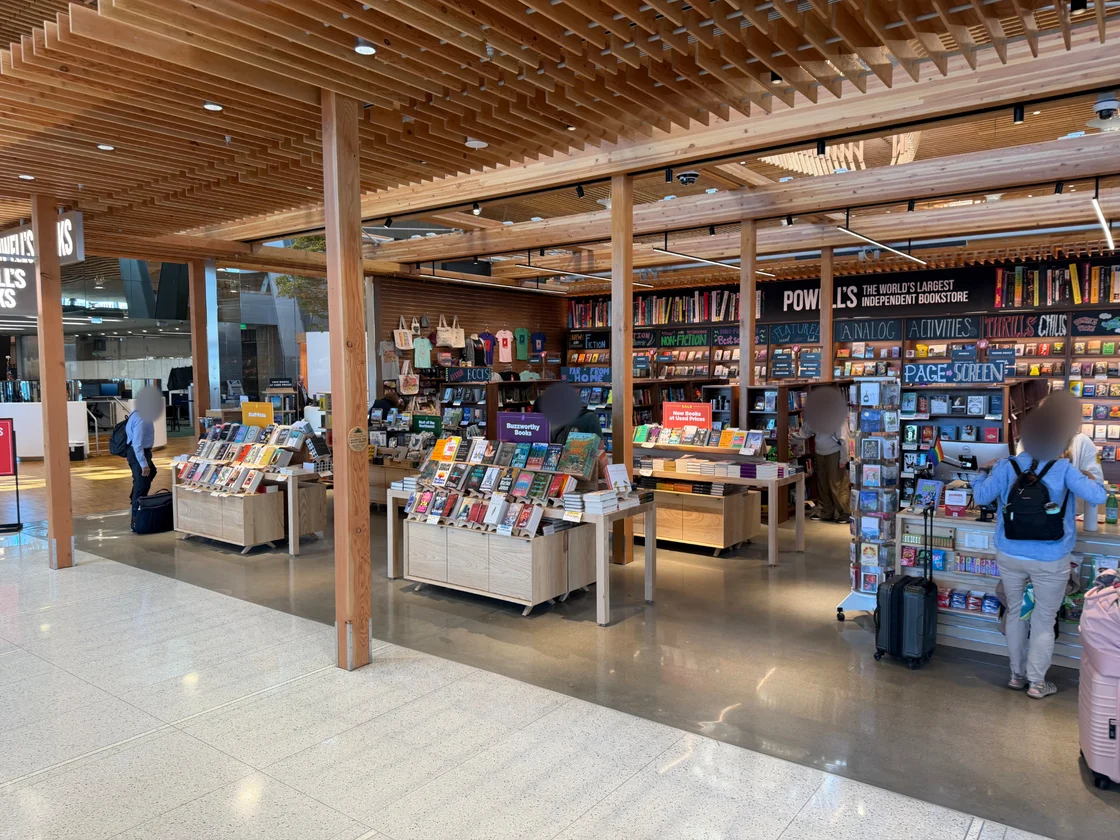
These categories create entry points based on what might interest someone right now. The books are largely face-out, and the displays invite exploration while making the assortment easier to understand quickly.
That matters when time is constrained.
How does brand expression help someone make a decision?
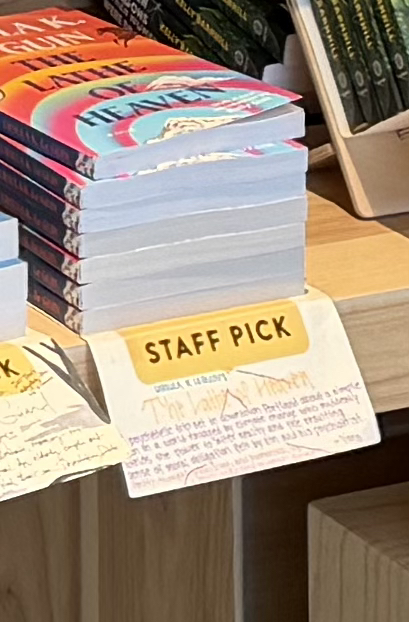
For me, the handwritten Staff Picks carry decades of earned trust.
My favorite job of all time was working at Bloomsbury Books in Ashland during college. I have been reading handwritten bookseller recommendations ever since. They influence what I pick up.
A small handwritten card communicates that someone read the book and found it worth recommending. Powell’s has earned enough trust with me over time that I give those recommendations meaningful weight.
At PDX, those cards also make the Powell’s brand tangible. Human judgment is visible throughout the display.
Trust built over years can shorten a decision that needs to happen in minutes.
What happens when the consumer brings AI into the experience?
As I ogled the books, I did a gut check on how many books I was willing to buy and at what total cost. It’s not uncommon for me to overbuy because my love of great books runs deep and I am trying to be more thoughtful about my purchasing. What I decided in real time was:
I wanted to find one book on sale that I would love, with a willingness to add a full-price book if I found something compelling.
It was the extremely appealing section titled “New Book at Used Prices” that opened me up to buying more than one book… OMG am I a sucker.
I photographed books that interested me and asked Claude to help me compare them using Goodreads ratings. I later added something the shelf could not tell Claude: I had just loved Shield of Sparrows.
What interests me most happened before I opened Claude.
Powell’s had curated the assortment. Its staff had added recommendations I trusted. The merchandising helped me identify relevant possibilities. I decided which books deserved a photograph.
The physical experience created unusually good inputs, and AI helped me sort through them quickly.
A well-designed physical experience can make the technology a consumer already carries more useful.
What can premium consumer brands take from this?
Consumers increasingly arrive with powerful tools in their pockets. Strong brand expression still has to earn attention and communicate why something deserves consideration.
Curation becomes especially interesting here. A premium brand can provide a thoughtful set of choices, make the differences understandable and offer credible signals that help someone move forward with confidence.
That can create delight and make buying easier.
How far does the experience travel?
My interaction with Powell’s continued after I paid.
The store offers beautiful bookmarks and free stickers, giving shoppers small pieces of the brand to take with them. I love details like that. They extend the experience beyond the transaction while remaining useful or enjoyable in their own right.
In an airport, that idea becomes almost literal: pieces of the brand leave Portland with you.
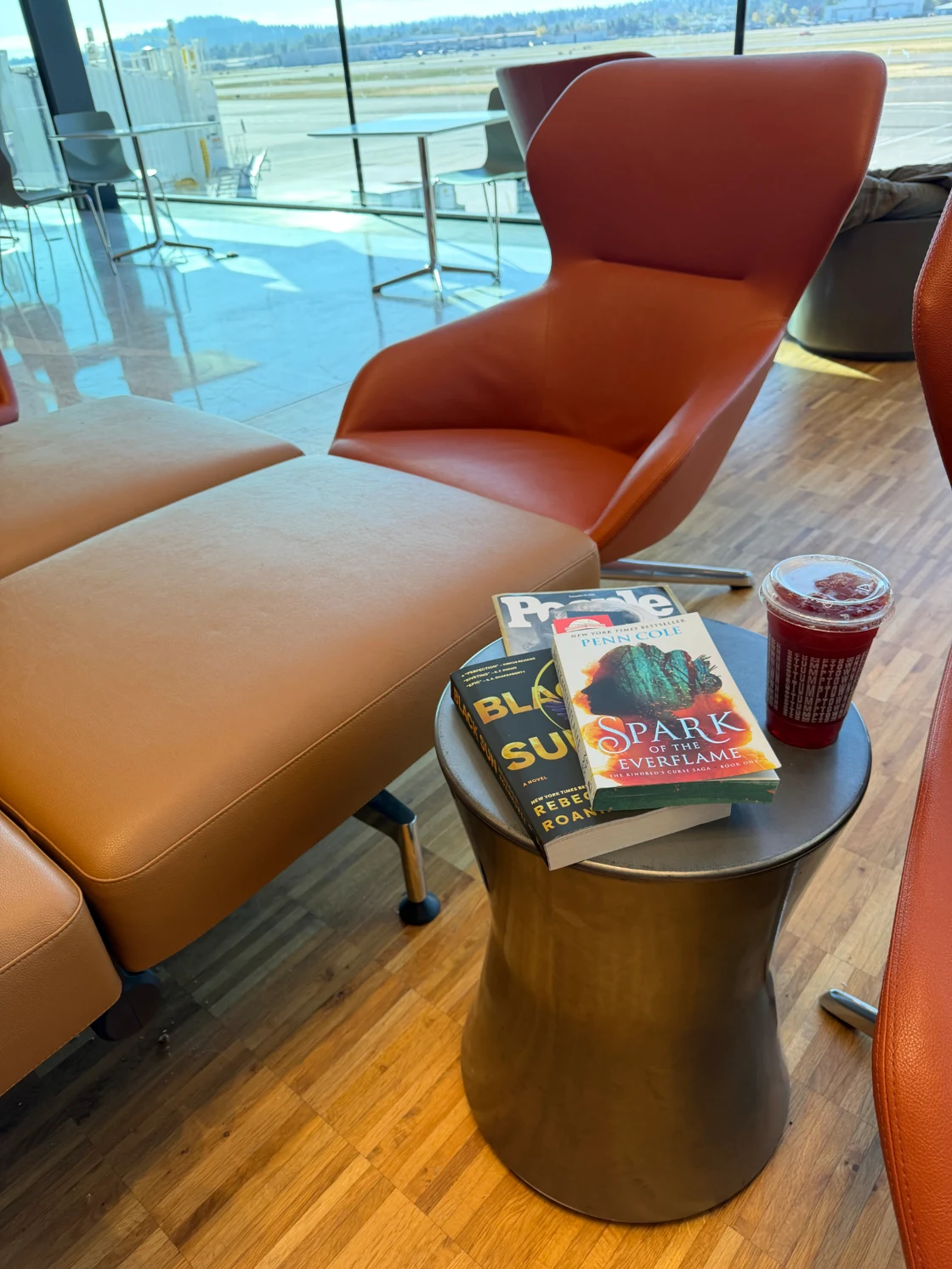
Later, when I had to put my phone away to board, I pulled out my notebook because I didn’t want to lose what the experience had me thinking about.
I left with books I was excited to read and an experience I was excited to tell someone about.
For a consumer brand, delight that converts and remains worth talking about afterward is a compelling outcome.