
AI & analog
As AI Becomes More Widespread, What Else Becomes More Valuable?
A question about AI, analog experiences and what premium consumer brands may want to protect as technology removes friction.

I left Powell’s at PDX thinking about something bigger than bookstores.
Generative AI has entered our work and personal lives remarkably quickly. Businesses are figuring out where it belongs in the consumer experience, including interactions where the technology may eventually become almost invisible.
I’ve embraced plenty of it. I had just used Claude in Powell’s to help me choose which books to buy.
At the same time, I’m fascinated by the energy around experiences and technologies that feel distinctly physical.
My nephew has been seeking out cassette tapes and Walkmans.
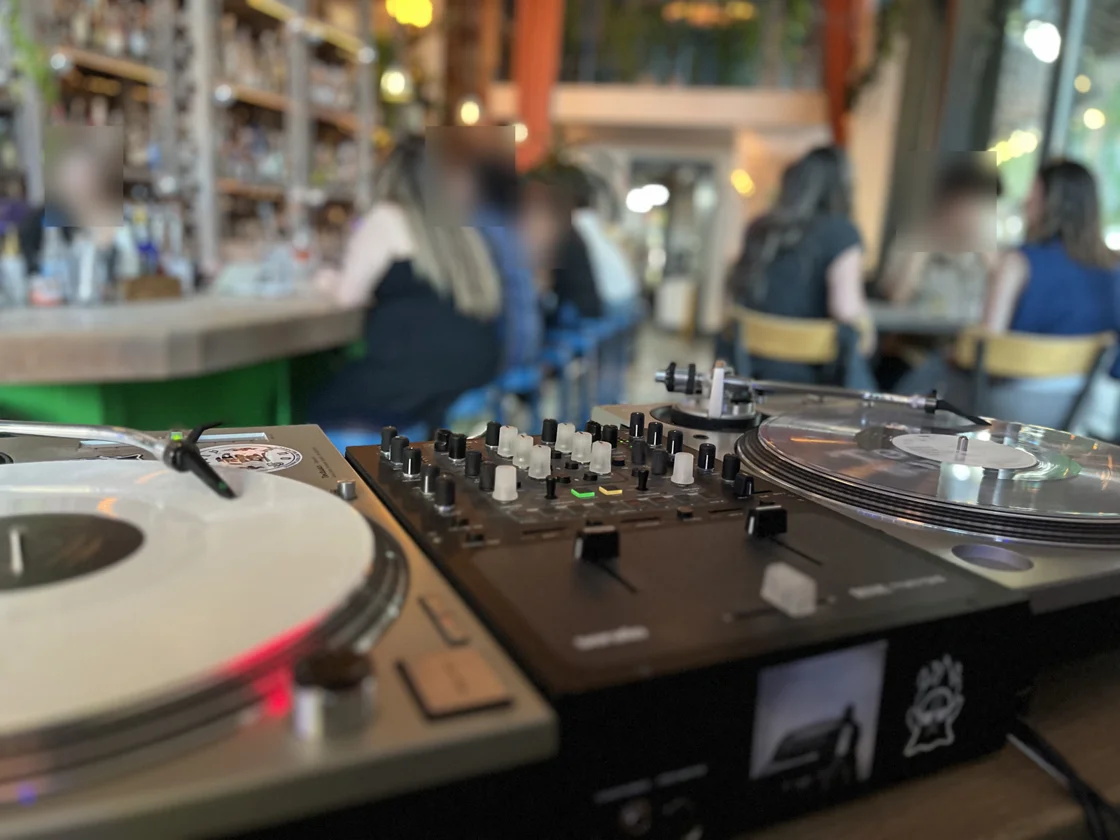
Physical music continues to have a global market alongside streaming. IFPI’s Global Music Report 2025 includes analysis of physical formats and a section called “The Vinyl Revolution.” [1]
Independent bookstores may be an even more interesting example.
My favorite job in college was working at Bloomsbury Books in Ashland. I remember the period when Amazon’s growth raised serious questions about the future of independent bookstores.
They are still here.
As digital tools make searching easier, the physical environment can still shape what earns consideration in the first place.
Those findings interest me because of what I had just experienced at Powell’s.
I wanted to touch the books. I trusted handwritten Staff Picks because I’ve relied on bookseller recommendations for decades.
I wanted to wander through a collection someone else had thoughtfully curated.
I also took photographs of the shelves and used AI to make my decision faster.
Later, when my phone had to go away as I boarded the plane, I pulled out a notebook to capture what the experience had me thinking about.
As AI makes more things effortless, which experiences become more valuable because they ask something of us?
Holding something can change how we engage with it. A recommendation from another person can carry trust that has accumulated over time.
Wandering can create discoveries we never would have searched for directly.
The Global Wellness Summit identified “Analog Wellness” as its leading wellness trend for 2025, describing renewed interest in pre-digital technologies, hands-on hobbies and offline experiences. [4]
The interesting opportunity may be deciding where technology should remove effort and where the experience itself deserves our attention.
Where should AI make the consumer experience easier?
AI can help with parts of an experience that involve sorting, comparison and personalization. My bookstore experiment was a tiny example. I could assess a curated set of unfamiliar books quickly and add information about my own reading preferences.
What deserves to remain distinctly human or tactile?
For premium brands, efficiency cannot be the only measure of a good consumer experience.
Some experiences earn their value through the attention someone chooses to give them.
A physical environment can create context. Human expertise can build confidence. A tangible object can extend the relationship after the transaction.
AI made part of my Powell’s experience easier. The physical and human parts made the experience worth having.
That leaves me with a question I suspect will become more important for consumer brands:
As AI becomes increasingly embedded in consumer experiences, where should we use it to remove friction, and where should we protect the parts people still want to experience for themselves?
I don’t think every brand will answer that question the same way.
I do think the brands that understand the difference will be interesting to watch.